TRIVORA / AUTOMOTIVE COMPONENTS
Turbocharger assemblies
Exhaust energy drives the turbine, which turns the compressor through a shared shaft. Intake air and exhaust gas follow separate paths.
View products ↗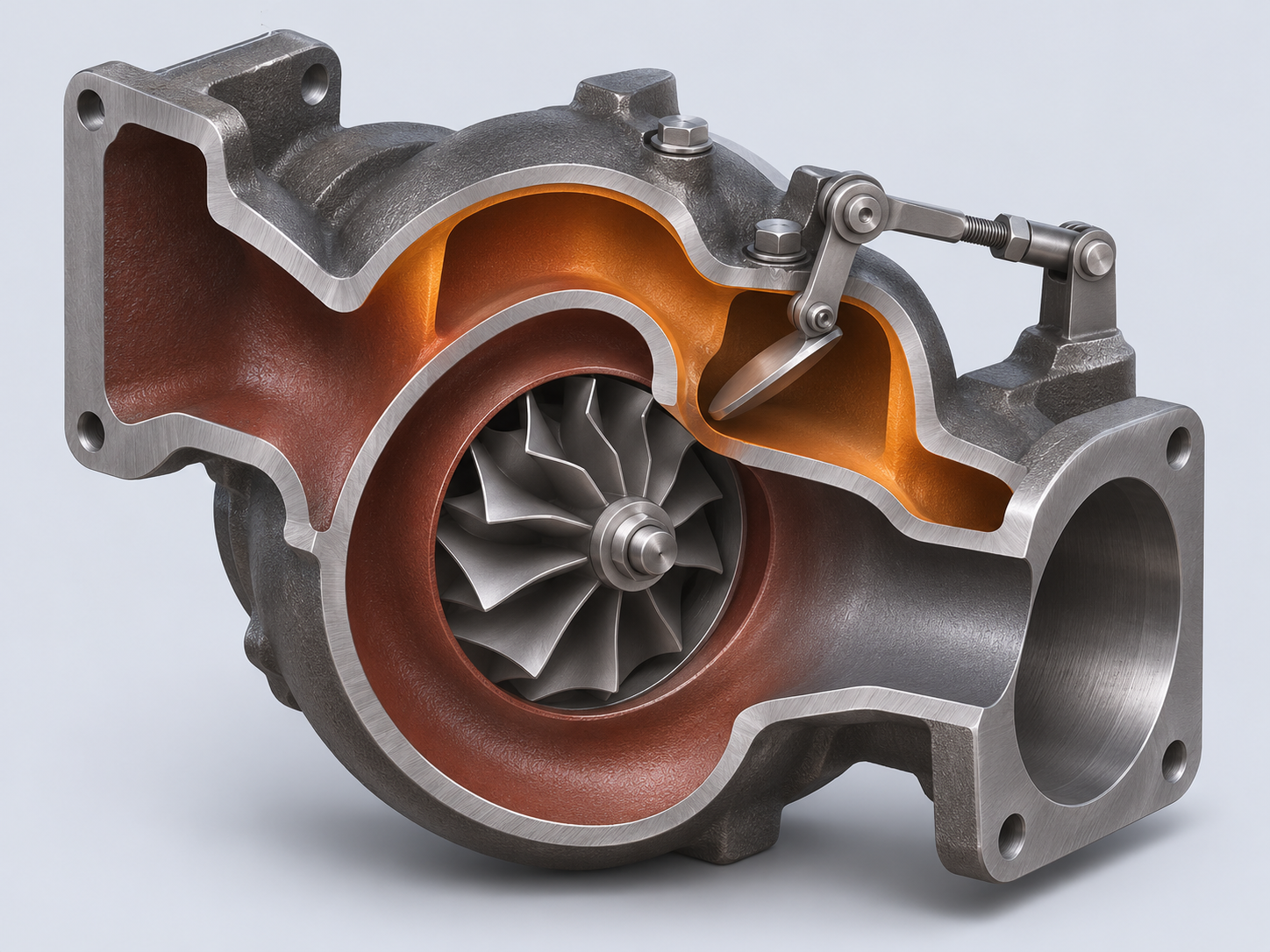
Turbochargers use exhaust energy to compress intake air. The main differences between these three types are how exhaust reaches the turbine and how boost is controlled.
Free-floating turbocharger
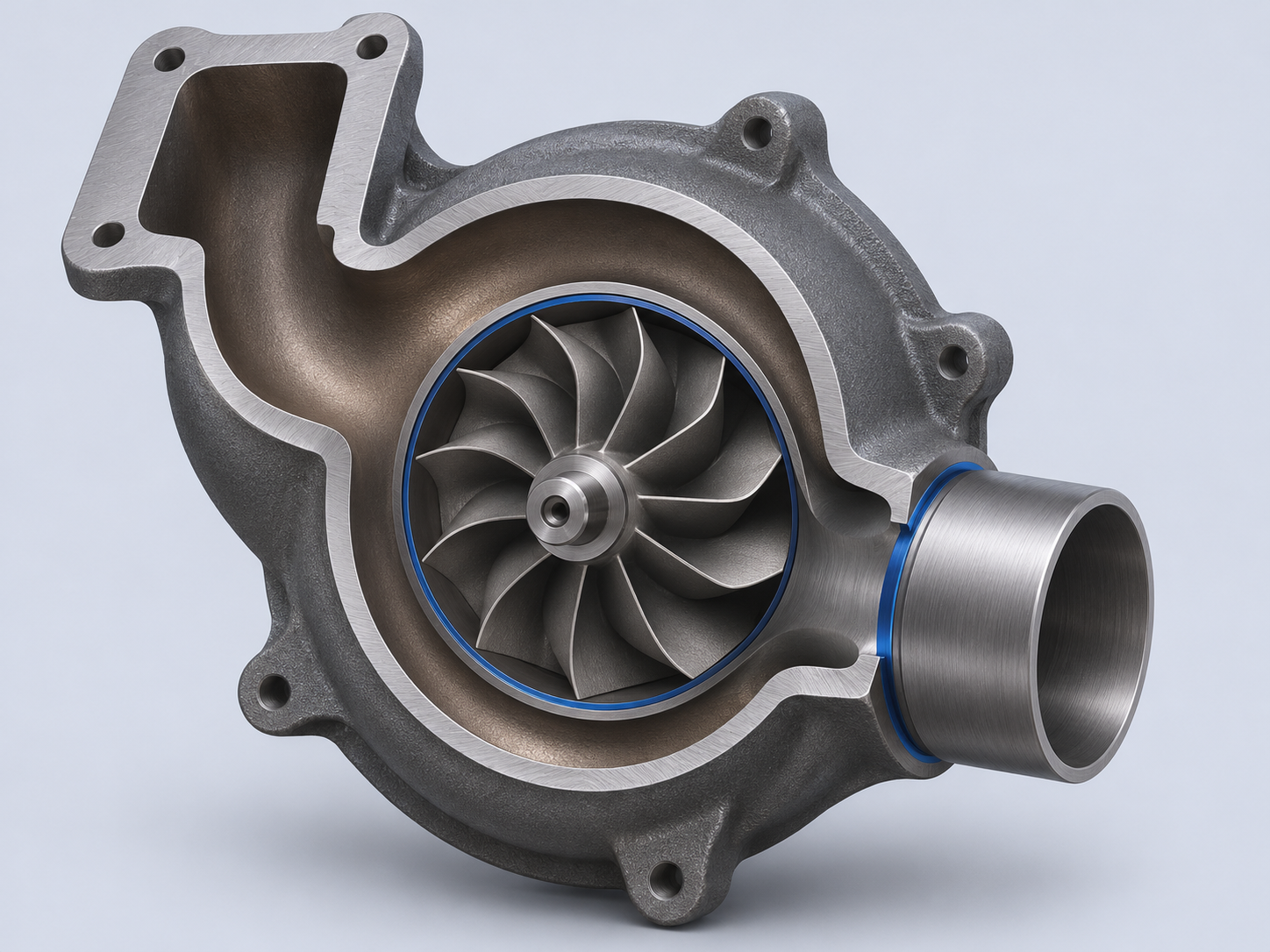
Exhaust gas drives the turbine wheel, which shares a shaft with the compressor. This type uses a fixed turbine passage and has no integral boost-control mechanism.
Design features
- Fixed passage geometry.
- No internal wastegate or variable guide-vane mechanism.
Application matching
Match the turbine housing, flange and oil or coolant connections to the application. The engine system determines how boost is managed.
Wastegate turbocharger
A wastegate opens a passage around the turbine wheel. Diverting part of the exhaust limits the energy driving the wheel and allows boost to be regulated.
Design features
- A separate exhaust bypass passage and valve.
- The valve can be operated by a pneumatic or electric actuator, depending on the assembly.
Application matching
Confirm actuator type, linkage, control calibration and mounting interfaces. Matching the outside shape is not enough.
Variable-geometry turbocharger
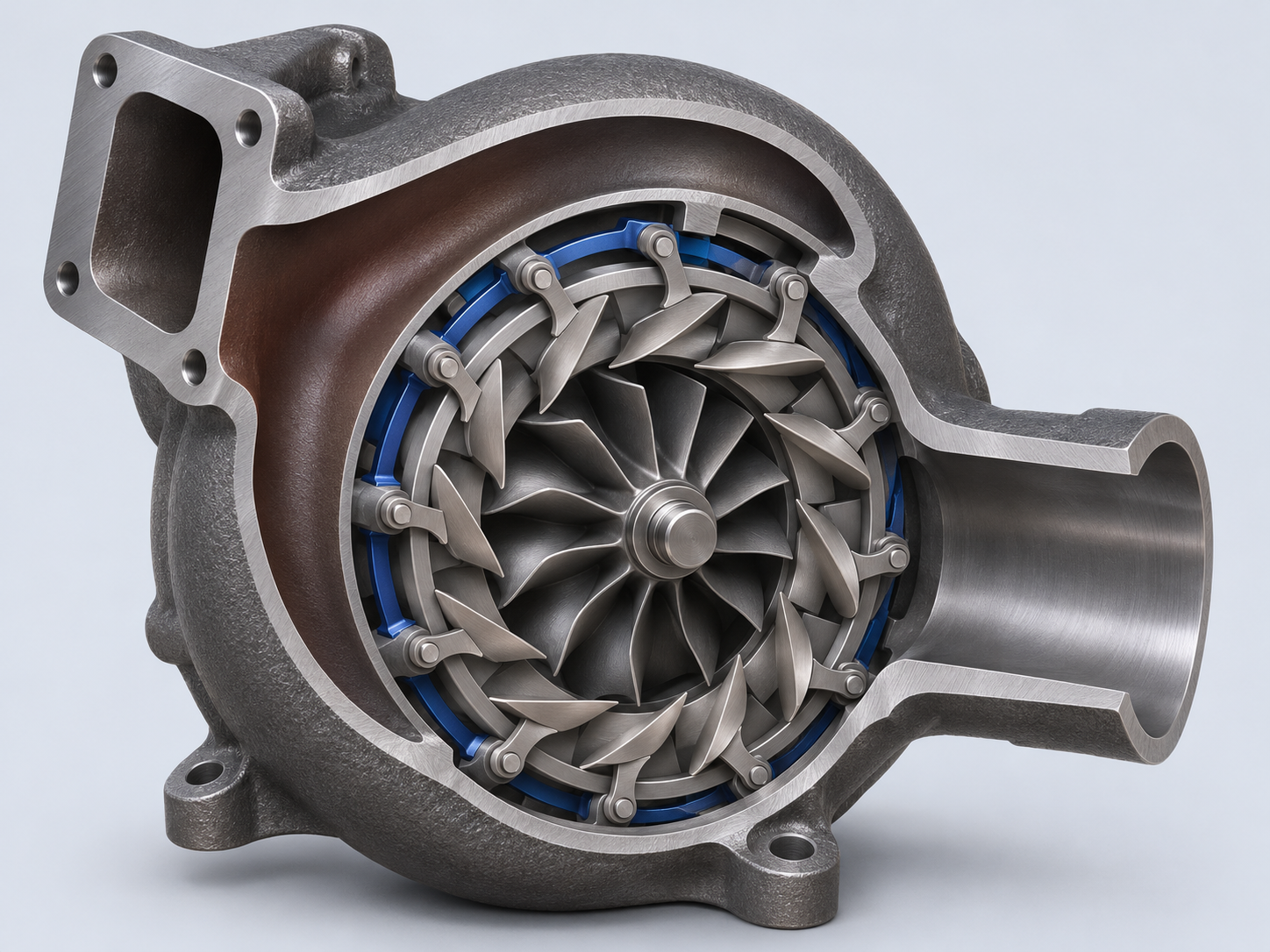
Adjustable guide vanes change the passage leading into the turbine wheel. Their position adjusts how exhaust reaches the wheel as engine operating conditions change.
Design features
- Moving guide vanes surrounding the turbine inlet.
- An actuator and linkage position the vanes.
Application matching
Confirm the vane mechanism, actuator, feedback signal and calibration. VNT and VTG are manufacturer-used names; they do not prove interchangeability.
Technical references
General technical descriptions, not a statement of TRIVORA stock, verified fitment or manufacturer affiliation.